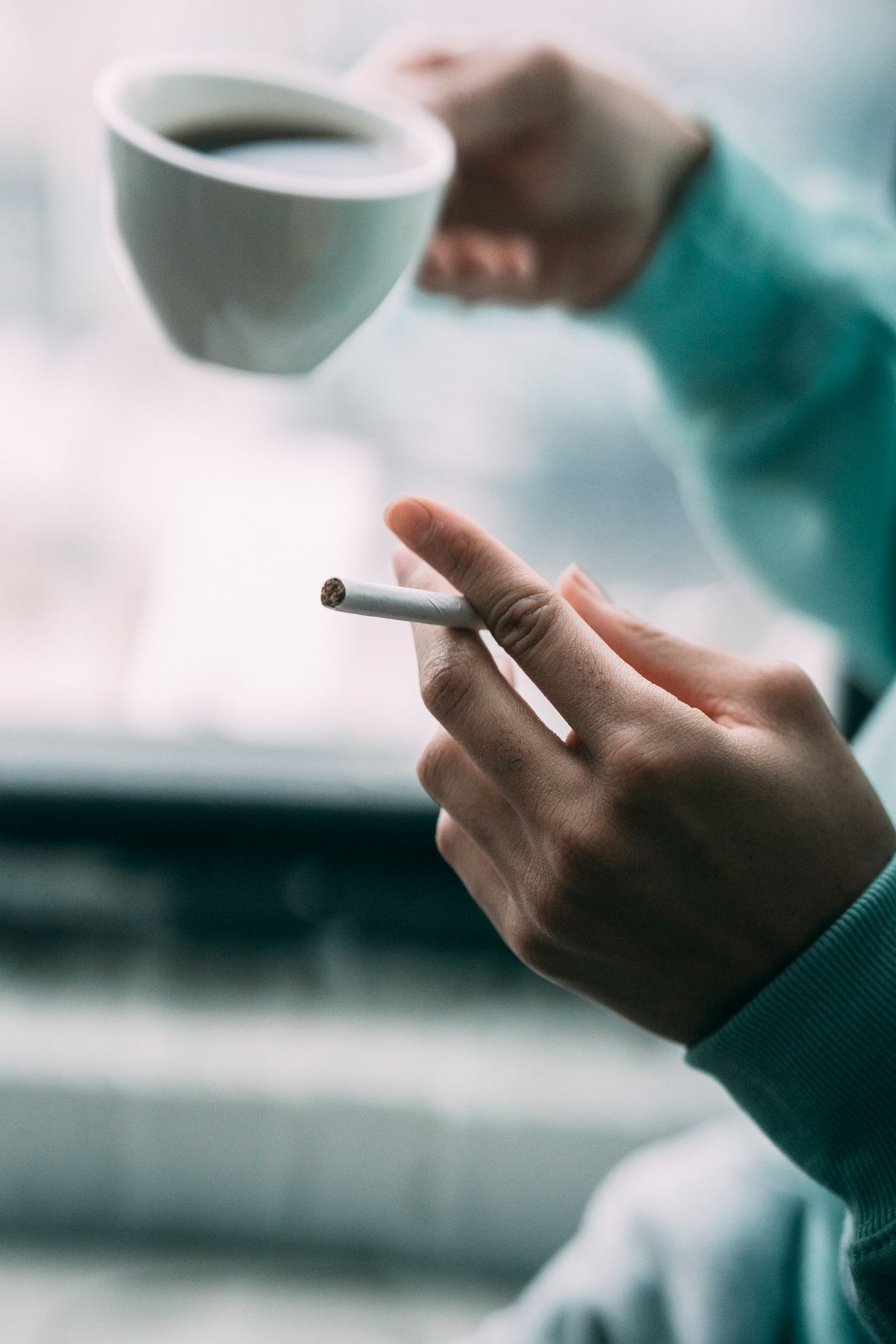
Why coffee and cigarettes can feel joined
Your brain learns which events often happen together. If you have smoked with coffee every morning for years, the smell of coffee, the mug and the place you sit may all remind you of a cigarette. You can still enjoy coffee, but you may need to change the scene for a while. This is a learned link, not proof that you cannot quit.
Change one part of the ritual
Try drinking coffee inside rather than on the porch, using a different mug or having it after breakfast instead of before. If you usually stand by the back door, sit somewhere else. Keep your hands busy by holding the cup with both hands or reading something short. The important part is choosing a change before the urge begins, rather than trying to invent one in the moment.
Notice caffeine after quitting
Tobacco smoke can affect the way your body handles caffeine. After you quit, the same amount of coffee may affect you more strongly. If you feel jittery or have trouble sleeping, talk to your clinician and consider reducing caffeine. You do not have to give up coffee forever. It may simply help to use less while your smoking routine changes.
Create a new reward after breakfast
Smoking may have been a sign that the day had begun or that you could enjoy a moment to yourself. Keep the moment of rest. Sit in the sun, call a friend, listen to one song or take a walk with your coffee. If the replacement feels like a punishment, it will be hard to repeat. Try something that gives you a small, pleasant pause.
Track the trigger for a week
For seven mornings, write down where you had coffee, whether you wanted to smoke and what helped. You may find that the urge is stronger on workdays or when you rush. Use that pattern to change your routine. An urge that appears in the same situation is also a chance to practise the same helpful response.
If changing the coffee spot does not help
Caffeine may feel stronger after you stop smoking because your body processes it differently. If you feel jittery or sleep poorly, consider reducing the amount and speak to a health professional if needed. The aim is not to ban every enjoyable routine. It is to make coffee a cue for something other than a cigarette.
Find the cue before changing the whole morning
Notice the order once: kettle, mug, back door, lighter. The strongest cue may be the place you drink coffee, not coffee itself. It might also be the quiet time before everybody wakes up. Choose one part to change so you can tell what helps.
For example, eat breakfast first and have coffee at the kitchen table. Leave the old outdoor chair empty. Put something useful in your free hand, such as a spoon to stir the drink. You can keep a pleasant morning pause while changing the route that usually ends in a cigarette.
Have a plan for café coffee too
Your home plan may work until someone suggests the café where you used to smoke outside. Decide on the seat before ordering. Choose a smoke-free part of the venue and tell your companion that you will stay there if they take a smoking break.
If waiting for takeaway coffee is the difficult part, wait away from people smoking and leave once the drink is ready. You do not need to stand in the old spot to prove that the link has gone. A different setting gives you room to learn the new sequence.
Compare two mornings instead of changing everything
On the first morning, keep your usual coffee but drink it inside after breakfast. Notice the moment an urge appears. Is it while the kettle boils, when you pick up the mug or when the back door comes into view? That detail tells you which part of the sequence needs attention.
On another morning, keep the same seat but delay coffee until you have dressed and started the day. Compare the practical result, not whether you felt perfectly calm. One change might make it easier to move on even if you still want a cigarette.
Choose the easier version and repeat it. If you change the drink, cup, meal, place and timing together, you may find something that works but struggle to repeat it outside home. A small experiment helps you keep the parts of the morning you enjoy while changing the smoking link.
Run a small morning experiment in MotiveHabit
Try one change for a few mornings and note the result in the Journal: “Coffee after breakfast, inside; urge still there but easier to leave alone.” If that setting fails, change the place or timing next. Avoid changing every part at once, because you will not know which part helped.
Keep the smoke-free check-in as your main record. A cue can weaken with practice, but there is no fixed number of mornings that guarantees it disappears. If restlessness or sleep gets worse, discuss caffeine and quitting support with a health professional instead of assuming coffee is the only cause.
Questions people often ask
Do I have to stop drinking coffee?
Not necessarily. Changing where or when you drink it may help break the old link.
Why does caffeine feel stronger after quitting?
Smoking affects caffeine metabolism, so you may become more sensitive to the same amount after stopping.
What if the urge returns every morning?
Repeat a new routine and ask about quitting support if cravings stay strong.
Do I have to stop drinking coffee to quit smoking?
Not everyone does. Try changing the place, timing or order of your coffee first. Consider caffeine changes if you feel more jittery or sleep poorly after quitting.
What if takeaway coffee is my trigger?
Plan where you will wait, leave once the drink is ready and avoid the spot where you normally smoke. Keep a response ready for an offer from someone nearby.
Turn the advice into your own routine.
You can learn a lot by noticing when the habit actually happens, what makes it easier to start, what gets in the way and what helps you return after a miss. MotiveHabit is designed to help you collect those patterns over time without replacing the practical advice above.